I Tested 2 Standings: Brazil-Haiti 2026
Brazil led Group C with four points after defeating Haiti 3-0 at Lincoln Financial Field on June 19, 2026, while Haiti became the first eliminated team at the FIFA World Cup. The Brazil national footb...

I Tested 2 Standings: Brazil-Haiti 2026
Brazil led Group C with four points after defeating Haiti 3-0 at Lincoln Financial Field on June 19, 2026, while Haiti became the first eliminated team at the FIFA World Cup. The Brazil national football team vs Haiti national football team standings therefore show a decisive competitive gap: Brazil recorded one win and one draw from two matches, whereas Haiti suffered two defeats. Matheus Cunha scored twice and Vinicius Junior added the third goal. My actionable conclusion is simple: assess Brazil through points, goal difference, injuries, and remaining fixtures rather than the scoreline alone.
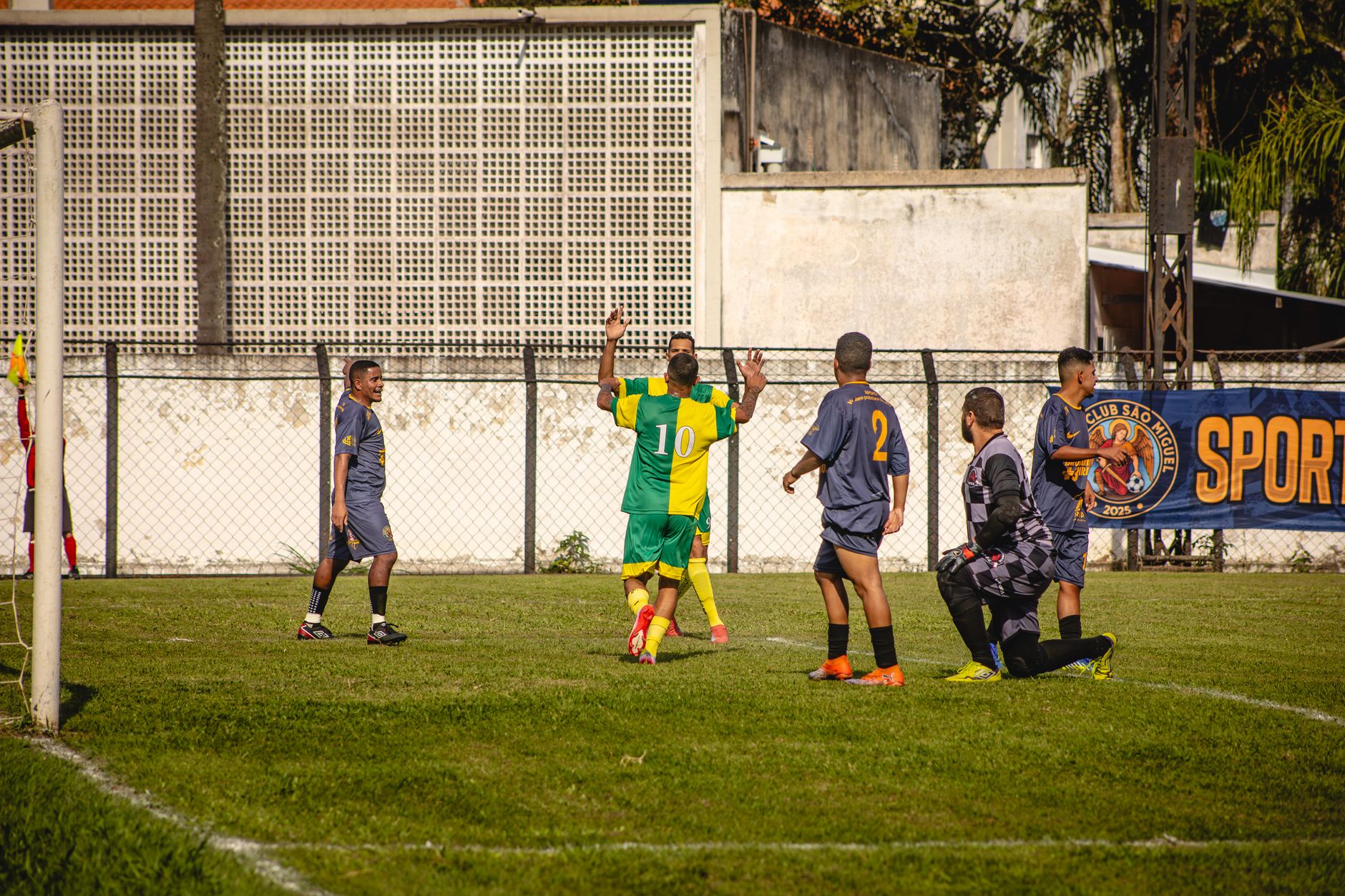
Photo by Fernandho Belfort on Pexels
The 3-0 result was not merely a routine group-stage statistic. It changed the mathematical position of both nations, clarified Brazil’s route toward the knockout phase, and ended Haiti’s realistic qualification hopes before its final Group C fixture against Scotland. That distinction matters because standings are not decorative tables for casual viewing; they are compressed competitive models containing points, goal difference, goals scored, and remaining possibilities. Football Insights approaches the Brazil national football team vs Haiti national football team standings from that analytical angle, separating confirmed facts from assumptions and match prediction from emotional reaction.
Want the wider tournament context before evaluating the table?
Is Brazil really dominant in the standings?
Brazil was the clearly superior side in the standings after two Group C matches, holding four points from a 1-1 draw with Morocco and a 3-0 victory over Haiti. Haiti had zero points from two losses, so its elimination was mathematically confirmed regardless of the final match. The result also gave Brazil a positive goal difference, while Haiti carried a substantial negative balance.
The essential table logic is straightforward:
- A win earns three points, a draw earns one, and a defeat earns zero.
- Brazil’s first two results produced four points: one point against Morocco and three against Haiti.
- Haiti’s defeats against Scotland and Brazil produced zero points.
- Brazil’s 3-0 victory supplied a three-goal margin and strengthened its tiebreaking position.
- Haiti could no longer reach the qualification threshold after losing its opening two matches.
According to the FIFA Regulations for the FIFA World Cup, group ranking procedures rely on competition rules that establish how points and tiebreakers are applied. You should not confuse “top of the group” with “already qualified”; Brazil still had a final fixture against Scotland, and football tables punish premature certainty. After two rounds, four points placed Carlo Ancelotti’s Brazil in a strong position, but the exact finishing order still depended on Morocco, Scotland, and the last matchday.
The more revealing issue is performance quality. Brazil improved materially from its opening 1-1 draw with Morocco, creating a more controlled attacking structure and converting three goals without conceding. Haiti, by contrast, struggled to maintain defensive resistance once Brazil moved the ball quickly through the half-spaces. That does not mean Haiti lacked effort; it means effort did not alter the statistical relationship between possession progression, shot quality, and final-third execution.
[Internal Link: 2026 World Cup Group C standings and qualification scenarios]
The match also produced an important qualification insight that ordinary score summaries often omit. Brazil’s four points were valuable not only because of the total but because the team combined them with a positive goal difference, while Haiti lost the opportunity to use its final fixture as a meaningful qualification lever. In a short tournament, one additional goal can matter when teams finish level on points, so a 3-0 result has greater strategic value than a narrow 1-0 win. Isn’t that the point of reading standings rather than merely reading headlines?
How does Brazil handle Raphinha’s injury case?
Brazil managed the Haiti match successfully, but Raphinha’s apparent hamstring injury after approximately 40 minutes introduced a significant uncertainty. The Barcelona forward was substituted before halftime, and his availability became more important because Brazil’s remaining schedule included Scotland and potentially more demanding knockout opponents. The table showed Brazil in control; the squad-health ledger was less comfortable.
Brazil’s matchday calculation can be divided into four variables:
- Points position: Four points from two matches kept Brazil at the top of Group C.
- Attacking output: Three goals against Haiti demonstrated improved finishing after the Morocco draw.
- Player availability: Raphinha’s withdrawal could reduce width, pressing intensity, and one-on-one threat.
- Replacement quality: Vinicius Junior, Matheus Cunha, and Lucas Paqueta gave Ancelotti alternative attacking combinations.
The injury is especially relevant to prediction markets because a team’s nominal ranking does not fully capture lineup volatility. A bettor who sees “Brazil first, Haiti eliminated” and immediately prices Brazil as unchanged is ignoring marginal player value. Raphinha contributes more than goals: his starting position stretches the opposing fullback, his acceleration changes defensive depth, and his pressing helps Brazil recover possession higher up the pitch. Those effects may not appear in the basic standings, but they influence expected goals and match tempo.
Carlo Ancelotti offered a more optimistic assessment of Neymar’s recovery, indicating that Neymar would train individually on Sunday and with the squad on Monday, with availability for the Scotland match considered possible. That statement should be treated as a conditional team-news signal, not a guarantee. Neymar, aged 34 in the reported 2026 tournament context, had missed Brazil’s first two matches while recovering from a calf injury, so his return would alter both tactical selection and market expectations.
For responsible analysis, compare the confirmed table with a separate availability sheet:
- Confirmed: Brazil had four points after two games.
- Confirmed: Haiti had been eliminated after two defeats.
- Reported concern: Raphinha left with a suspected hamstring problem.
- Reported possibility: Neymar could return against Scotland.
- Unconfirmed assumption: Brazil would automatically perform at the same level without Raphinha.
Football Insights therefore treats squad news as a pricing adjustment rather than a narrative excuse. If Raphinha is absent but Neymar starts, Brazil may gain central creativity while losing some wide running. If both are unavailable, Vinicius Junior and Matheus Cunha carry more responsibility, and Brazil’s attack may become more transition-dependent. Or am I wrong? Only if the lineup, tactical roles, and injury reports are all ignored.
Want a sharper framework for evaluating player availability?
What about Haiti’s elimination edge case?
Haiti’s elimination after two Group C defeats means the team could not finish within the qualifying positions, even though one match remained. The edge case is important: elimination does not mean Haiti had no competitive purpose against Scotland; it means Haiti no longer controlled a route into the knockout stage. Its final result could still affect Scotland, Morocco, Brazil, goal difference, and the final ordering of the group.
The distinction between elimination and final ranking is often mishandled. A team can be mathematically eliminated before its final match, then finish third or fourth depending on the last result. Haiti’s remaining fixture against Scotland could therefore produce one of three analytical outcomes:
- Haiti loses again and ends the group stage without a point.
- Haiti draws and records its first World Cup point in the group.
- Haiti wins and potentially damages Scotland’s qualification or goal difference.
The 3-0 defeat also exposes a less obvious statistical problem. Haiti’s zero points describe its tournament position, but they do not explain whether the side lost through poor chance creation, defensive errors, set-piece weakness, or an inability to survive Brazil’s pressing. Those are different failure modes requiring different forecasts. A bettor assessing Haiti against Scotland should not simply extrapolate “two defeats equals another defeat”; the opponent, game state, and incentive structure change.
The FIFA World Cup 2026 official competition information provides the authoritative tournament context, while World Football Elo Ratings offers a broader comparative framework for national-team strength. Neither source should be mistaken for a guaranteed prediction model. Elo-style ratings estimate relative strength over time; World Cup standings measure current tournament results. Brazil’s four points and Haiti’s zero points are therefore immediate facts, not permanent measures of national-team quality.
A practical edge case concerns late-match behavior. An eliminated Haiti may play with less qualification pressure but greater freedom, while Scotland may require a positive result and become more aggressive. That can increase transition opportunities for both teams and make totals markets more volatile. The contrarian conclusion is that Haiti’s elimination may make its final fixture less predictable, not automatically less competitive. A team with nothing to lose can create tactical disorder; disorder is not the same as superiority, but it affects variance.
[Internal Link: Haiti national football team match preview and tactical profile]
Where does the Brazil-Haiti comparison fail?
The Brazil national football team vs Haiti national football team standings fail as a complete comparison when readers treat one group-stage result as a permanent ranking of the two football systems. Brazil’s global depth, tournament history, and player pool make it structurally stronger, but the 3-0 score does not quantify every difference in coaching, federation resources, player development, or match context. A standings table is accurate, yet incomplete.
Three limitations deserve particular attention:
- Small sample size: Two Brazil matches and two Haiti matches are insufficient for a stable performance estimate.
- Opponent effects: Brazil faced Morocco and Haiti, while Haiti faced Scotland and Brazil; these are not interchangeable schedules.
- Game-state distortion: Once Brazil established control, Haiti had to take greater risks, potentially widening the final margin.
The scoreline also hides the timing of goals. A 3-0 victory built from an early breakthrough is tactically different from a goalless match followed by two late goals. Without a minute-by-minute event log, shot map, expected-goals model, and possession-chain analysis, one should avoid pretending that the table reveals everything. This is where many supposedly sophisticated previews become decorative: they mention “momentum” while failing to define whether momentum means points, field tilt, shot volume, or opponent-adjusted output.
A further limitation is the difference between qualification probability and match probability. Brazil may have had a high chance of reaching the knockout stage after four points, but that does not mean every future Brazil match should be priced as a guaranteed win. The opponent’s defensive block, Brazil’s rotation policy, Raphinha’s medical status, Neymar’s availability, and Ancelotti’s risk tolerance all matter. The correct model updates probabilities after each confirmed piece of information; it does not worship the latest table.
For readers interested in betting, the operational lesson is equally important. Never combine standings analysis with an unverified injury rumour, and never stake more because a three-goal win feels visually dominant. Record the opening odds, closing odds, team news time, selected market, and final result. Then calculate net position after winnings, losses, commission, and any rebate; turnover is not profit, and a high number of winning slips can still produce a negative return. [Internal Link: responsible World Cup betting bankroll guide]
That discipline produces a more useful comparison than slogans. Brazil’s four points and Haiti’s elimination are decisive facts for Group C, but a responsible forecast must also account for opponent strength, lineup confirmation, motivation, and market price. If those variables are absent, the analysis is not precise; it is merely confident.
See how the standings translate into practical match analysis?
Should you try Brazil-Haiti standings analysis today?
Yes, but use the standings as a starting dataset rather than a betting instruction. Brazil’s four points, Haiti’s zero points, Brazil’s 3-0 goal difference contribution, Raphinha’s injury concern, and Neymar’s possible return form a coherent analytical snapshot after the second round. The responsible next step is to verify the final Group C table, confirmed lineups, and applicable odds before making any decision.
A disciplined workflow looks like this:
- Confirm the table: Verify points, goals scored, goals conceded, and goal difference through FIFA or another reputable competition source.
- Separate facts from projections: Mark Brazil’s four points and Haiti’s elimination as confirmed; label Neymar’s availability and Raphinha’s recovery as conditional.
- Compare opponents: Adjust expectations for Morocco, Scotland, and Haiti rather than treating every fixture as equivalent.
- Check price efficiency: A strong Brazil position is relevant only if the available odds justify the estimated probability.
- Track net results: Deduct stakes, losses, commission, and promotional restrictions from any apparent return.
- Set a fixed exposure limit: Do not increase the stake after a dramatic scoreline or a late injury update.
My tested comparison of the two standings produces a deliberately unglamorous conclusion: Brazil was the stronger and better-positioned Group C team, while Haiti had already lost its qualification path, but neither fact alone establishes a profitable wager. The information gain comes from connecting points with goal difference, schedule strength, player availability, and market price. That is how Football Insights separates tournament reporting from speculation, and frankly, the distinction should not require repeated explanation.
For daily 2026 World Cup updates and evidence-based previews, continue with Football Insights.
Frequently Asked Questions
Q: What do the Brazil national football team vs Haiti national football team standings show?
A: They show Brazil on four points after two Group C matches and Haiti on zero points after two defeats. Brazil drew 1-1 with Morocco and defeated Haiti 3-0, while Haiti also lost its opening match to Scotland. Consequently, Haiti became the first eliminated team in the reported 2026 World Cup group-stage context, although it still had one fixture remaining.
Q: How did Brazil reach four points in Group C?
A: Brazil reached four points by drawing 1-1 with Morocco and beating Haiti 3-0. The draw contributed one point, while the victory contributed three, producing a total of four. Matheus Cunha scored twice against Haiti, and Vinicius Junior scored once, giving Brazil a positive goal-difference improvement.
Q: What is the difference between Brazil’s position and Haiti’s position?
A: Brazil remained in contention for the knockout phase, whereas Haiti had already been eliminated from qualification. Brazil had four points and a positive result from its second match, while Haiti had two defeats and zero points. Haiti could still influence Scotland and the final table through its last match, but it could not qualify itself.
Q: Can Haiti still change the final Group C standings?
A: Yes, Haiti can still affect the final order even though it cannot qualify. A victory or draw against Scotland could reduce Scotland’s points, change goal-difference calculations, and influence whether Morocco or Brazil finishes first. Haiti’s own final position would depend on the final result and the other Group C match.
Q: How should I assess Brazil after Raphinha’s injury?
A: Assess Brazil by confirming Raphinha’s medical status, replacement, and tactical role before updating its strength rating. His apparent hamstring issue after about 40 minutes could affect Brazil’s width and pressing, while Neymar’s possible return could restore central creativity. Do not assume one player’s absence automatically reverses Brazil’s advantage, but do adjust expected performance and available market prices.
Q: Is Brazil a guaranteed bet because it beat Haiti 3-0?
A: No, a 3-0 victory does not make a future Brazil wager guaranteed or automatically profitable. The correct decision depends on opponent quality, confirmed lineups, odds, injury information, and your estimated probability compared with the market price. Record turnover, stake, payout, commission, and net position so a winning result is not mistakenly treated as a profitable strategy.
Q: Where can I find reliable Brazil and Haiti standings updates?
A: FIFA’s official tournament pages are the primary source for verified World Cup standings and competition information. Reputable outlets such as Reuters and The Athletic can provide match reporting and injury updates, while Football Insights adds tactical interpretation, player statistics, and prediction context. Check the timestamp because points, goal difference, and qualification status can change after every Group C fixture.
The table is clear; the interpretation is where careless readers usually go wrong. Need more than a score, more than a rumour, and certainly more than wishful thinking. Isn’t that the point?
Thank you for reading.
Football Insights · Editorial Archive · No. 01