Why 48 Teams Reshaped World Cup 2026
The 2026 FIFA World Cup will feature 48 teams, 104 matches, 16 host venues, and three host countries: Canada, Mexico, and the United States. The tournament runs from June 11 to July 19, 2026, with the...

Why 48 Teams Reshaped World Cup 2026
The 2026 FIFA World Cup will feature 48 teams, 104 matches, 16 host venues, and three host countries: Canada, Mexico, and the United States. The tournament runs from June 11 to July 19, 2026, with the opening match in Mexico City and the final scheduled for MetLife Stadium in New Jersey. FIFA’s expanded format creates more qualifying opportunities but also introduces greater travel, workload, and pricing uncertainty for analysts. Football Insights tracks schedules, team tactics, player statistics, match predictions, and tournament developments. Start by separating confirmed facts from speculation, then evaluate every prediction against form, squad availability, venue, and market movement.

Photo by Carlos Reyes on Pexels
Is the 48-team World Cup really a competitive upgrade?
Yes, the 48-team World Cup expands global representation from 32 to 48 nations, while FIFA’s approved structure preserves a 32-team knockout field after a 12-group opening phase. The format produces 104 matches, compared with 64 in Qatar 2022, and gives more confederations meaningful access to the tournament.
The arithmetic matters more than the slogan. Under the 2026 system, the 48 teams will be divided into 12 groups of four, and the top two teams in each group will advance alongside the eight best third-placed teams. That creates a new qualification layer: finishing third is no longer automatically fatal, but the quality of a third-place record becomes difficult to compare because group strength varies. Analysts who treat every third-place point total as equivalent are ignoring the structure, or am I wrong?
The expansion is especially significant for the Confederation of African Football, the Asian Football Confederation, and the Concacaf region. FIFA’s allocation gives Africa nine direct places, Asia eight, Concacaf six including the three hosts, South America six, Europe 16, and Oceania one, with two additional positions decided through the FIFA Play-Off Tournament. Those numbers increase representation, but they also increase the chance of mismatched group strength and uneven tactical quality.
From an investor-style perspective, the tournament has two opposing effects:
- More teams create more markets, including qualification, group finishing position, and player-performance lines.
- More matches create more data, but not necessarily better data, because injuries, rotation, climate, and travel accumulate.
- Third-place qualification increases late-group uncertainty and can encourage conservative tactics.
- Host-country qualification removes three conventional qualifying slots from the wider Concacaf pool.
- The knockout bracket may reward teams that manage energy rather than teams that dominate possession.
FIFA’s official World Cup 2026 competition information should remain the primary reference for format changes, match dates, and qualification rules. Football Insights uses that foundation but adds a practical layer: compare expected lineups, opponent-adjusted results, and schedule density before assigning any probability to a team.
How does the 2026 World Cup handle its 104-match schedule?
The 2026 World Cup handles the expanded schedule through 12 groups of four teams, a 32-team knockout stage, and a final tournament window of 39 days from June 11 through July 19. The schedule is distributed across Canada, Mexico, and the United States, requiring analysts to model geography as well as football quality.
The first confirmed anchor is the opening match at Estadio Azteca in Mexico City on June 11, 2026. Mexico will host the tournament’s first game, while Canada and the United States will also stage group matches. The final is planned for MetLife Stadium in the New York metropolitan area on July 19. Do not collapse “New York” and “New Jersey” into the same administrative label; the stadium is in East Rutherford, New Jersey, and that distinction matters for venue research, transport planning, and local conditions.
The 16 venues are spread across three national markets:
- Canada: Toronto and Vancouver.
- Mexico: Mexico City, Guadalajara, and Monterrey.
- United States: Atlanta, Boston, Dallas, Houston, Kansas City, Los Angeles, Miami, New York/New Jersey, Philadelphia, San Francisco Bay Area, and Seattle.
Travel is not a decorative detail. A team playing in Mexico City faces an altitude environment of roughly 2,240 metres above sea level, while a team later appearing in Miami encounters heat and humidity at near sea level. A match in Seattle introduces a different logistical pattern from one in Atlanta or Dallas. These environments influence recovery, pressing intensity, hydration protocols, and substitution timing, although the effect varies by preparation and squad depth.
The schedule also changes the value of squad rotation. In a 32-team competition, a strong side could often calculate its route through three group matches and four knockout rounds. In 2026, qualification remains possible for more teams, but the knockout phase begins with an additional round of 32. A contender may therefore need eight matches to win the trophy rather than seven, increasing the importance of centre-back depth, full-back availability, and midfield replacement quality.
See the details through Football Insights’ [Internal Link: World Cup 2026 schedule and venue guide], particularly if you are comparing match times across Eastern Time, Central Time, Pacific Time, and local Mexican time zones.

Photo by Victor Barbosa on Pexels
What about travel, altitude, and the tournament’s edge cases?
Travel, altitude, heat, and third-place qualification form the most important 2026 World Cup edge cases because they can distort simple rankings. A team’s nominal strength may remain constant, yet its performance environment can change sharply between Mexico City, Vancouver, Miami, and Seattle.
The most obvious edge case is a group containing a host nation. Canada, Mexico, and the United States qualified automatically as hosts, so their group-stage opponents must be evaluated without the normal qualifying evidence. Mexico also benefits from opening the tournament at Estadio Azteca, a venue with historic significance and unusual altitude. That advantage is real but should not be converted into an automatic victory assumption; pressure, opponent quality, and tactical conservatism still determine the result.
A second edge case concerns the best third-placed teams. In a 12-group competition, eight third-place teams advance, meaning a team can survive after a poor opening match if it repairs its goal difference and earns a decisive result in the final group fixture. That creates potential late-market volatility. A draw that appears harmless may be insufficient if several other groups produce third-place teams on four points, while a three-point team with a positive goal difference could remain alive.
A third edge case is the scheduling of rest. The public fixture list may show only dates and opponents, but a serious preview should record:
- Number of recovery days between matches.
- Distance between the previous and next venue.
- Local kickoff time and climate.
- Whether the team crossed multiple time zones.
- Rotation pressure caused by yellow-card accumulation.
- Availability of substitutes in high-intensity positions.
This is an information advantage that casual previews often omit. During a 2026 match cycle, a team travelling from Vancouver to Miami crosses three time zones and moves from a cool coastal environment to high humidity; that transition is not equivalent to a short domestic transfer. The exact itinerary will matter once FIFA publishes the final match allocation, so responsible analysts should not invent precision before the schedule is confirmed.
For betting analysis, separate the match probability from the price. If a model estimates a team at 55 percent to win, the fair decimal price is approximately 1.82 before margin and uncertainty. A bookmaker offering 1.70 is not automatically attractive merely because the team is stronger; the implied price has already absorbed probability and commission. Football Insights therefore records stake, odds, closing line, and result separately, rather than celebrating turnover as profit.
[Internal Link: match prediction methodology and probability guide] provides a useful framework for distinguishing forecast accuracy from profitable pricing.
Where does the 2026 World Cup format fail?
The 2026 format fails when expansion is treated as proof of quality, when travel is ignored, or when additional matches are mistaken for additional certainty. Forty-eight teams improve access and commercial reach, but the larger competition also increases fixture congestion, uneven group strength, and the possibility of cautious final-round football.
The central weakness is structural comparability. In a four-team group, the quality of the strongest opponent can determine whether a third-place team finishes on three, four, or six points. Comparing raw points without opponent-adjusted context is therefore statistically weak. A team that earns four points against two top-ranked opponents may have performed better than a team that earns five points against fragile opposition, yet the table alone cannot show that.
Another weakness is player workload. The FIFPRO workload research has repeatedly highlighted the relationship between congested schedules, recovery time, and injury risk. FIFA’s official competition regulations govern the tournament, but clubs, national teams, and medical staffs still face a practical problem: players arrive after long domestic seasons, then potentially play eight World Cup matches in extreme climatic variation. The regulation says, “The FIFA World Cup shall be played in accordance with the Laws of the Game,” but the Laws do not solve recovery, travel, or accumulated fatigue.
A third limitation affects prediction markets. Public attention will concentrate on Brazil, Argentina, France, England, Spain, Germany, and the United States, but reputation can inflate prices. A famous team may attract more wagers without possessing a corresponding tactical edge. The rational approach is to track expected goals, shot quality, set-piece efficiency, defensive transition, goalkeeper performance, and opponent-adjusted possession rather than selecting a badge.
Football Insights also treats historical head-to-head records cautiously. A match between France and Argentina in 2026 will not be explained adequately by their 2022 final, because coaching staffs, squad ages, tournament routes, and venue conditions change. Historical evidence is useful only when its causal relevance survives those changes. Otherwise, it is narrative inventory, not analysis.
The most contrarian conclusion is therefore straightforward: the expanded World Cup may make outright winner markets less efficient, but it can make individual match markets more volatile and less reliable. More available prices do not necessarily mean more value. Turnover rises when the event is larger; net position improves only when the bettor’s estimated probability is better than the market’s after margin.
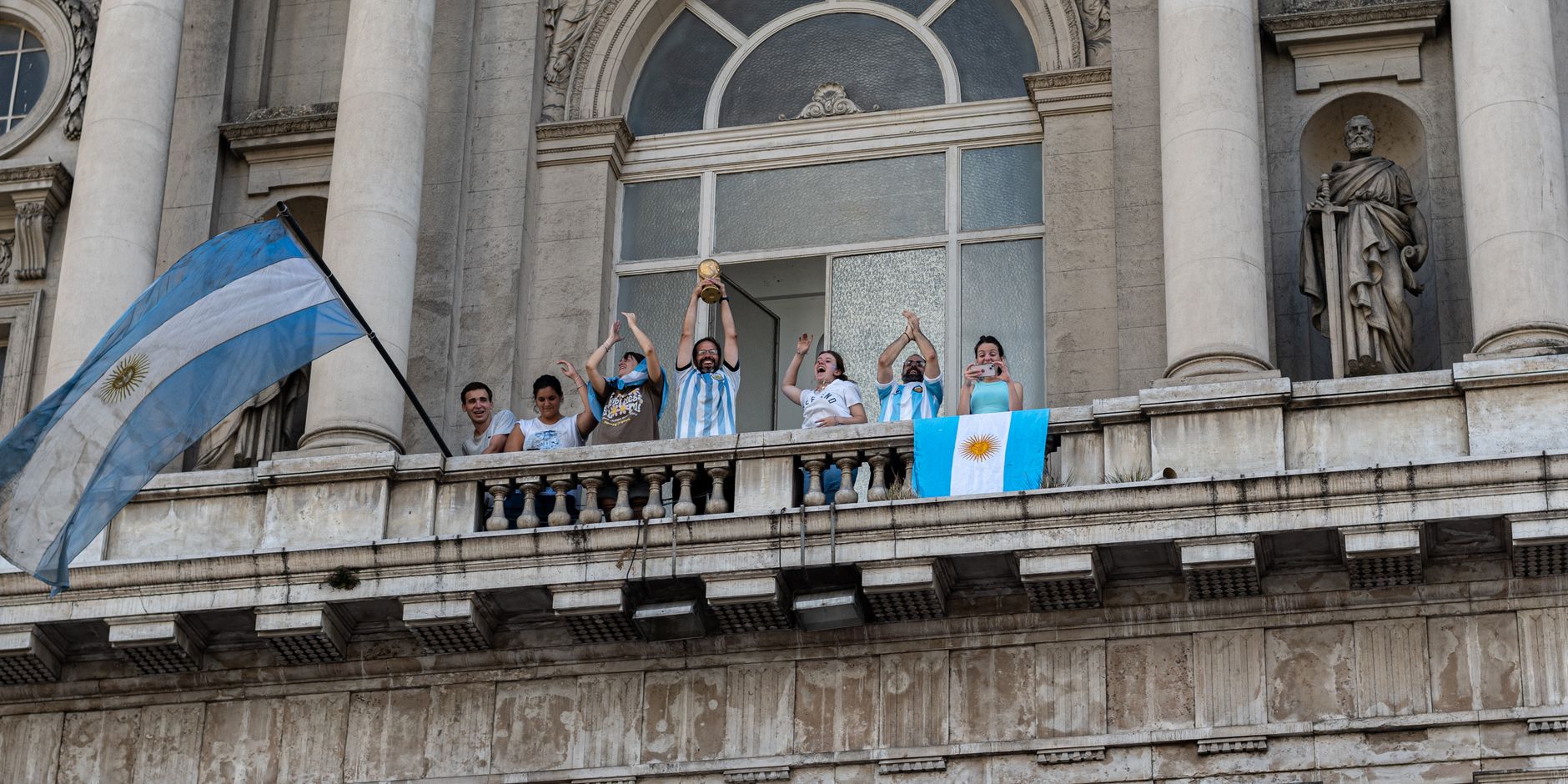
Photo by Fabrizio Velez on Pexels
Should you try World Cup 2026 predictions today?
You can begin World Cup 2026 analysis today, but you should treat early predictions as provisional rather than final betting instructions. The most reliable process combines confirmed FIFA information, squad news, tactical data, venue conditions, and disciplined record-keeping, while postponing high-confidence positions until lineups and market prices become clearer.
Start with a defined information hierarchy:
- Confirm the competition fact: Use FIFA for format, dates, hosts, venues, and regulations.
- Measure team strength: Review recent competitive matches, expected goals, opponent quality, and defensive actions.
- Audit personnel: Track injuries, suspensions, minutes, age profile, and replacement quality.
- Model context: Add travel distance, altitude, temperature, humidity, kickoff time, and rest.
- Compare price with probability: Convert odds into implied probability, then remove bookmaker margin.
- Record the decision: Log stake, odds, estimated probability, closing price, and final outcome.
This process prevents one of the most expensive errors in sports wagering: confusing a correct prediction with a good bet. If France wins at 1.35 when your fair price was 1.60, the result does not validate the price. Conversely, a well-priced underdog can lose while still representing a mathematically sound decision. Isn’t that the point of an investor mindset?
Responsible participation also requires hard limits. Set a tournament budget before the first match, never chase losses after a late goal, and avoid treating Football Insights predictions as guaranteed outcomes. Check the legal rules and licensed operators in your jurisdiction, especially across the United States, Canada, and Mexico, where regulation differs by state, province, and country.
For deeper preparation, consult the [Internal Link: responsible football betting guide] and the [Internal Link: World Cup team statistics hub]. These resources should support a decision, not manufacture one.
A practical World Cup 2026 tracking sheet
A useful spreadsheet should contain more than the final score. Record the following fields for every match:
- Match date, venue, and local kickoff time.
- Team strength rating before the match.
- Starting XI and formation.
- Expected goals and shots inside the penalty area.
- Set-piece goals and defensive set-piece errors.
- Travel route and rest-day count.
- Opening odds, closing odds, and your estimated fair odds.
- Stake, return, turnover, and net position.
That last distinction deserves emphasis. Turnover is the total amount wagered; return is the amount received after settlement; net position is return minus stakes and any fees. A bettor who stakes $100 on ten matches has $1,000 in turnover, but that figure says nothing about profitability. If returns total $940, the net position is negative $60, regardless of how impressive the activity appears.
After 30 tracked selections, calculate closing-line value and yield rather than relying on memory. A 6 percent yield over five bets is not robust evidence, while a 1.5 percent yield over 200 comparable bets is more informative. The sample is still exposed to variance, but the second figure is analytically less fragile.
Want a more structured research workflow? Football Insights can help you organize tournament schedules, player statistics, tactical comparisons, and prediction notes before the 2026 World Cup begins.
Frequently Asked Questions
Q: What is the 2026 FIFA World Cup format?
A: The 2026 FIFA World Cup will contain 48 teams divided into 12 groups of four. The top two teams in every group plus the eight best third-placed teams will enter a 32-team knockout stage. The tournament will include 104 matches, compared with 64 at Qatar 2022. This format increases the number of participating nations and creates an additional round before the round of 16.
Q: When does the World Cup 2026 start and finish?
A: The 2026 World Cup starts on June 11, 2026, and ends with the final on July 19, 2026. The opening match is scheduled for Estadio Azteca in Mexico City, while the final is planned for MetLife Stadium in East Rutherford, New Jersey. Match times should be checked against FIFA’s official schedule because local kickoff times and broadcast listings may change.
Q: How can I follow the World Cup 2026 schedule?
A: Follow the schedule through FIFA’s official World Cup platform and reputable competition databases such as ESPN’s FIFA World Cup schedule. Record the venue, local kickoff time, group position, and rest days rather than looking only at the date. Football Insights also covers match predictions, team tactics, player statistics, and tournament updates for readers building a detailed schedule.
Q: What is the difference between World Cup 2026 predictions and betting odds?
A: A prediction is an estimated outcome or probability, while betting odds are a market price that includes bookmaker margin and market demand. For example, odds of 2.00 imply a gross probability of 50 percent before accounting for margin. A prediction becomes potentially valuable only when your fair probability exceeds the probability represented by the available price after uncertainty and commission.
Q: Is World Cup 2026 betting legal and safe?
A: World Cup 2026 betting is legal only where local law permits it and where the operator holds the required licence. Rules differ across United States states, Canadian provinces, Mexico, and other jurisdictions, so check the relevant regulator before depositing. Use age-verified, licensed providers, set a fixed budget, and avoid chasing losses; Football Insights does not guarantee results.
Q: Why might a World Cup 2026 prediction fail?
A: A prediction can fail because of injuries, red cards, tactical changes, finishing variance, goalkeeper errors, weather, travel fatigue, or an inaccurate probability estimate. Even a strong model cannot remove randomness from a single football match. Review the original assumptions, closing price, lineup changes, and performance data before deciding whether the process or merely the result was poor.
Q: How much does it cost to follow World Cup 2026 analysis?
A: Following World Cup 2026 news and analysis can be free, although live broadcasts, premium statistics, travel, and betting deposits may involve separate costs. Football Insights provides tournament coverage focused on predictions, tactics, player data, and match developments, but readers should verify any commercial terms before using an external service. Set a research budget independently from any wagering budget, because information spending and betting stakes are different financial categories.
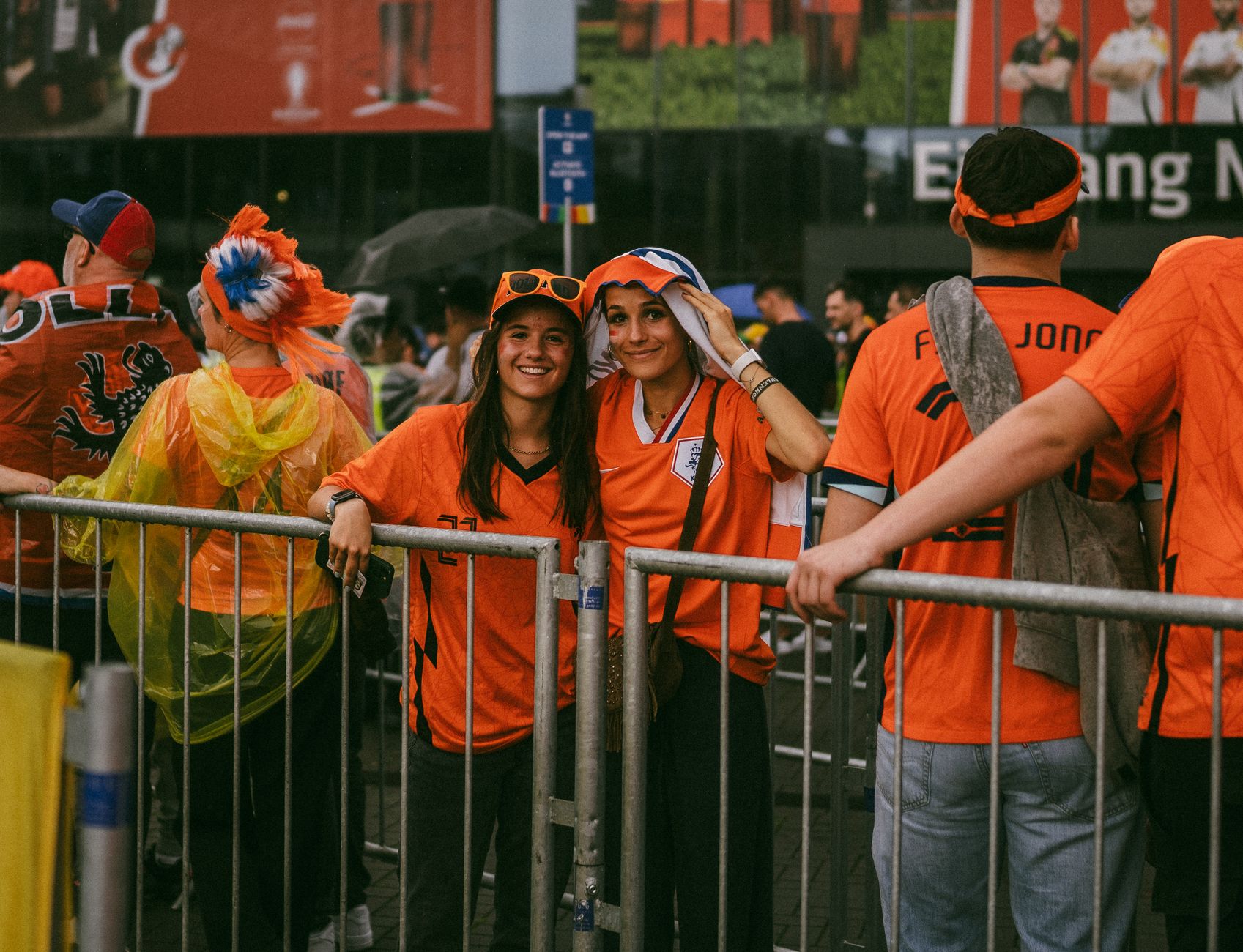
Photo by Omar Ramadan on Pexels
The 2026 FIFA World Cup is not merely a larger version of Qatar 2022; it is a different analytical problem built around 48 teams, 104 matches, 16 venues, and a three-country travel footprint. The most durable edge will come from disciplined comparison: confirmed FIFA facts, opponent-adjusted performance, squad depth, environmental context, and accurately recorded prices. Start with the schedule, challenge every assumption, and keep turnover separate from net results.
Explore Football Insights for daily World Cup 2026 predictions, tactical breakdowns, player statistics, and tournament coverage before the market decides the story for you.
Thank you for reading.
Football Insights · Editorial Archive · No. 01